Many people read the sell-off in data center stocks as the first crack in the AI bubble. I look at the same numbers and see something else. The demand is there, and it is substantial. The trouble lies elsewhere: in the construction itself, in access to power, and in who financed all of this with borrowed money.
A scale that frightens people
On 14 October Gartner published a calculation that seems to have made it into every financial news outlet. This year AI providers will spend almost a trillion dollars on infrastructure, and another six trillion between 2027 and 2030. For the numbers to work, meaning to cover financing costs and deliver a 12% return on capital, data center owners would need to earn $8.5 trillion by 2030. Gartner expects them to earn $3.6 trillion at most. The gap is bigger than Japan’s entire GDP.
Brookings, in turn, estimates that between 2025 and 2032 the United States will spend an average of 3.63% of GDP a year on AI infrastructure. On average, that is more than America spent on railroads in the 19th century or on fiber during the dot com bubble.
No wonder that when Vertiv, Eaton and Schneider started losing ground on the stock market, the comparison with 2000 came straight back. Anyone who worked in the industry back then remembers how telecom companies laid thousands of kilometers of fiber that then sat unused in the ground for years.
Perez and the question missing from the debate
At moments like this I like to go back to Carlota Perez. In “Technological Revolutions and Financial Capital” she describes how great technological revolutions unfold. First comes the installation phase: capital floods into the new infrastructure, valuations take off, and eventually there is a crash. Only after that does the deployment phase begin, when the technology really enters the economy and starts paying for itself. That is how it went with railroads, and that is how it went with the internet.
The whole AI bubble debate assumes we are somewhere in the middle of that first phase and that a crash is only a matter of time. I have a feeling something does not add up here. More and more points to both phases running in parallel this time.
A few data points. Data center vacancy in North America is 1.4%, even though supply grew by more than a third in a year. New buildings find tenants right away. On 15 October Jensen Huang said Nvidia cannot keep up with chip demand. Tokens are getting cheaper, while renting the latest GPUs (B200, B300) is getting more expensive. Hyperscaler capex forecasts for 2027 are twice as high today as they were a year ago, and over the past few years analysts have tended to underestimate them rather than overestimate.
In 2000, fiber was waiting for users. Today, users are waiting for data centers.
To be clear: none of this disproves Gartner’s calculation. Gartner never says there will be a shortage of customers. It says the capital will not come back, and those are two different things. A data center can be leased down to the last rack and still lose money if the hardware inside ages faster than it can earn its keep. That is why, in the bubble debate, I am more interested in who borrowed the money to serve this demand, and on what terms.
What I see in companies
In PE fund portfolio companies and with the clients I work with, I see one more thing that the reports rarely mention. Token consumption is growing so fast that AI bills keep rising even though the unit price is falling. And companies have started counting. Every AI use case now has to defend its ROI. Sometimes it turns out to be cheaper to hire an experienced developer than to burn through tokens, and then companies simply do that.
Some will say this is a sign of weakening demand. There is something to that, because demand for AI clearly responds to price, and that limits the revenue infrastructure owners are counting on. But what I mostly see is a market maturing. The “AI everywhere” stage is ending and the “AI where it pays off” stage is beginning. In Perez’s terms, this is exactly the start of the deployment phase. And demand like that is something you can build a business on for longer than on enthusiasm.
The real problem: execution
I see the most risk in the building itself. It sounds less exciting than a bubble, but that is how it looks.
According to Goldman Sachs, of the $2.3 trillion in data center investment announced worldwide, projects worth $492 billion are actually under construction. The rest is on paper. Costs are rising faster than construction materials prices. Switchgear is 60% more expensive than at the end of 2021, and transformers, generators and cooling around 30% more. Before the pandemic a megawatt of capacity cost about $7 million to build. Today the average is $11.3 million, and for data centers it is $15 to $20 million.
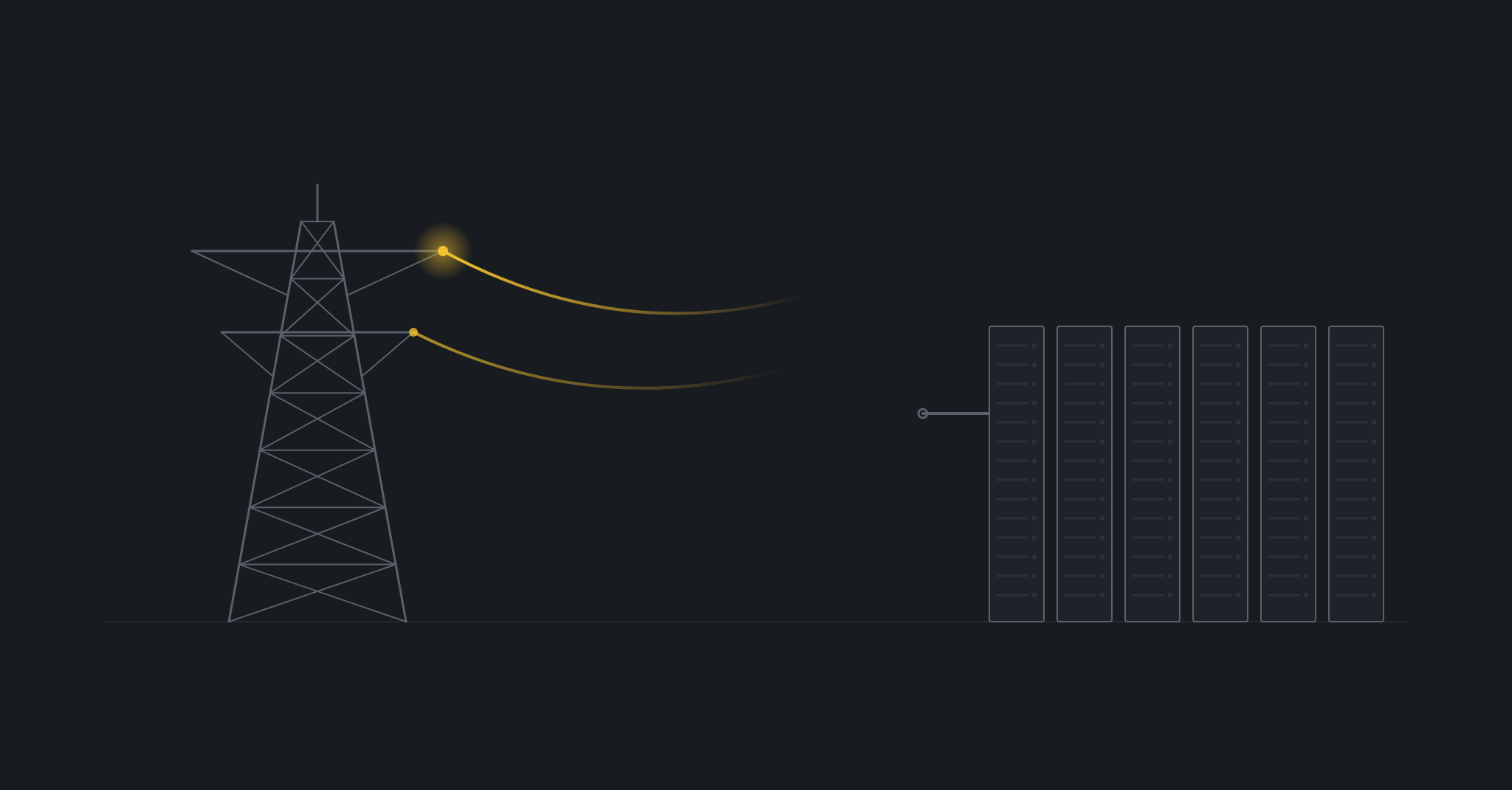
Then there is power. In its base case, Morgan Stanley estimates that by 2029 the United States alone will be about 76.5 GW short of power for data centers. For comparison, that is roughly the combined capacity of every power plant in Poland.
There is no shortage of people willing to invest. What is short is power and equipment that can physically be delivered on time.
Three layers, three different risks
So rather than asking whether this is a bubble, I prefer to break the market into layers, because each one has a completely different risk profile.
Hyperscalers, meaning Amazon, Microsoft, Google and Meta, are in the most comfortable position. They have capital, customers and strong negotiating power. When a project falls apart, they can walk away. According to press reports, that is what Microsoft did in Loughton near London, where it was supposed to be the anchor tenant of an Nscale data center and the grid connection slipped into the 2030s. The risk stays with someone further down the chain.
Neoclouds are the most exposed. At the end of June CoreWeave had about $35 billion of debt and equity of around $5 billion. Add hardware that loses value quickly and an order book that is largely conditional. Every delay hurts twice here. Gartner predicts that by 2030 more than 80% of neoclouds will lose their independence. If something breaks, I think it will be right here, even at full occupancy. They will simply run out of time to repay.
The position of physical infrastructure suppliers, meaning power, cooling and switchgear, is more interesting. Delays actually help them. Vertiv shows this well. In the second quarter its revenue grew 24%, but came in about $110 million below analyst expectations, because large multiphase projects ran late and the supply chain got clogged. The stock fell 17% in a single day even though earnings per share beat forecasts, and by 20 October the shares had lost more than 30% in total. The market punished the company for its schedule, even though demand was fine.
On 28 October Vertiv reported its third quarter: sales up 61% year on year, organic orders more than doubled, and full year guidance raised once again. The revenue that was missing in July arrived a quarter later. Suppliers like this have orders for years ahead and more and more say in pricing conversations.
What this means for boards and funds
The question “is this a bubble” does not get you very far. It is better to ask which layer my exposure sits in and how it is financed.
For PE funds I would add one more thing. Almost every AI based value creation plan contains an assumption about whether computing power will be available and what it will cost. Hardly anyone checks it, yet it should be stress tested just like exchange rates or energy prices. On a supervisory board I would ask management a simple question: what price for computing power did you put into the business case, and what happens if it goes up by half?
Companies that already count the cost of tokens for every deployment and consciously decide where to use a model and where to use a person are a step ahead of the rest. Not at all because they spend less on AI. They simply know what they are paying for.
Technological revolutions rarely fail for lack of vision. More often they fail because of a transformer that did not arrive on time, or a loan that could not be repaid. An AI strategy that ignores this is a declaration, not a strategy. Humility toward physics and the balance sheet should be its first chapter.
#AI #DataCenters #PrivateEquity #Infrastructure #BoardGovernance #ValueCreation
Related articles:
– Algorithms born of our prejudices
– Will algorithms commit war crimes?
– Machine, when will you learn to make love to me?
– Artificial Intelligence is a new electricity
Sources:
Gartner press release, 14 Oct 2026, on AI infrastructure spending exposed to impairment
Brookings, S. Van Nieuwerburgh: $10.3 trillion over 2025 to 2032, an average of 3.63% of GDP a year
Vertiv Q3 2026 results (28 Oct 2026), 8-K filing with the SEC
Vertiv Q2 2026: DataCenterDynamics, Barchart; 32.4% share decline from 22 Jul to 20 Oct: Trefis
Morgan Stanley, base case US data center power shortfall through 2029: 160 GW of demand, 76.5 GW gap
Microsoft and Nscale, Loughton: Telegraph, Reuters, Network World (21 Oct 2026)
CoreWeave: approx. $35.07 billion of book debt as of 30 Jun 2026