Space data centers are no longer a conference slide. We already have the first satellites, the first billion dollar valuations and the first delays. The delays tell us the most about this market.
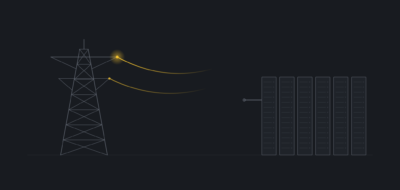
For the last two hundred years, industry has gone where the energy was. Mills were built on rivers, and aluminum smelters went to Norway and Iceland because hydropower there was cheap. Today the same logic applies to compute. New AI data centers are increasingly waiting not for chips, but for a grid connection, permits and the consent of the local community. Space is tempting because it offers exactly what is scarcest on Earth: sunlight without night or clouds, and no neighbors to file a complaint.
When Elon Musk started talking about data centers in space, many dismissed it as yet another vision built for the narrative. Today it is harder to wave away in one sentence. The money, the hardware and the first missions are real. The question has moved somewhere else.
What has actually changed
In March, at GTC, Nvidia unveiled the Space-1 Vera Rubin module, designed to operate in orbit. According to the company, it delivers up to 25 times more AI compute for space based inference than the H100. Impressive, but the signal matters more than the spec: the largest supplier of AI chips has publicly declared orbit a market.
Just as interesting was what Jensen Huang said on stage. He admitted that in a vacuum there is no convection and no conduction, only radiation, so the way these systems are cooled still has to be figured out. I appreciate that honesty. This is exactly where the line runs between technology that works in a keynote and infrastructure that works in a budget.
Three different bets
When I look at this market through an investor’s eyes, I don’t see one industry. I see three different bets, each with its own risk profile and its own payback horizon.
The first bet: compute where the data is created. This is the most mature segment and, in my view, the most underrated. Earth observation satellites collect far more data than can ever be sent down to the ground. Planet Labs, which images the entire planet every day, uses Nvidia platforms to go from raw pixels to actionable insight in near real time. China has gone further. In May 2025, ADA Space and Zhejiang Lab launched the first 12 satellites of the Three Body Computing Constellation, linked by lasers carrying up to 100 Gb/s, with plans to grow to 2,800 satellites. In January this year, Axiom Space put the first two nodes of its orbital data center into orbit. Nobody in this segment has to beat the price of electricity in Texas. It is enough that processing the data on the spot is cheaper and faster than sending it home.
The second bet: a cloud in orbit that competes with data centers on Earth. This is where Starcloud makes the most noise. In November 2025, the Redmond based startup launched a 60 kg satellite carrying an H100, the first data center class GPU in space. In March it raised $170 million at a $1.1 billion valuation, and in August another $250 million at $2.3 billion. It has filed with the US FCC for a constellation of up to 88,000 satellites. The target Starcloud-3 is meant to weigh three tons and deliver 200 kW, and CEO Philip Johnston is counting on energy costs of around 5 cents per kWh, provided Starship launches become significantly cheaper.
Google’s Project Suncatcher sits in the same basket. Its first prototype, carrying four TPUs and built together with Planet, reached orbit on October 1. Google itself calls it a very minimal test, and reportedly a single TPU can run continuously for only about fifteen minutes before it has to cool down. Two more satellites, testing links between each other, are due to fly in 2027.
The third bet: own the rocket. In February, SpaceX acquired xAI and filed with the FCC for up to one million compute satellites. Aetherflux, founded by a Robinhood cofounder, rebranded as Cowboy Space, raised $275 million at a $2 billion valuation and is building a rocket whose upper stage stays in orbit as a 1 MW data center. Its first launch is planned for late 2028. The logic is simple: if launch is the bottleneck, you need your own launch.
The most interesting number is a date that slipped
Starcloud-2 was supposed to fly in October 2026. Now we are talking about 2027 and two 8 kW satellites on rideshare missions. I’m not pointing this out to call anyone wrong. Anyone who has led a transformation in a large organization knows the schedule is the first casualty of reality.
I’m pointing it out because this delay shows the structure of the market so clearly. A startup that wants to compete with SpaceX in orbital compute depends on SpaceX for its launches. Supplier and competitor in one. In due diligence on a portfolio company, a setup like that would be the first red flag in the report.
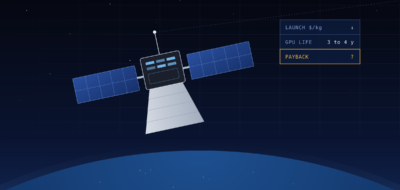
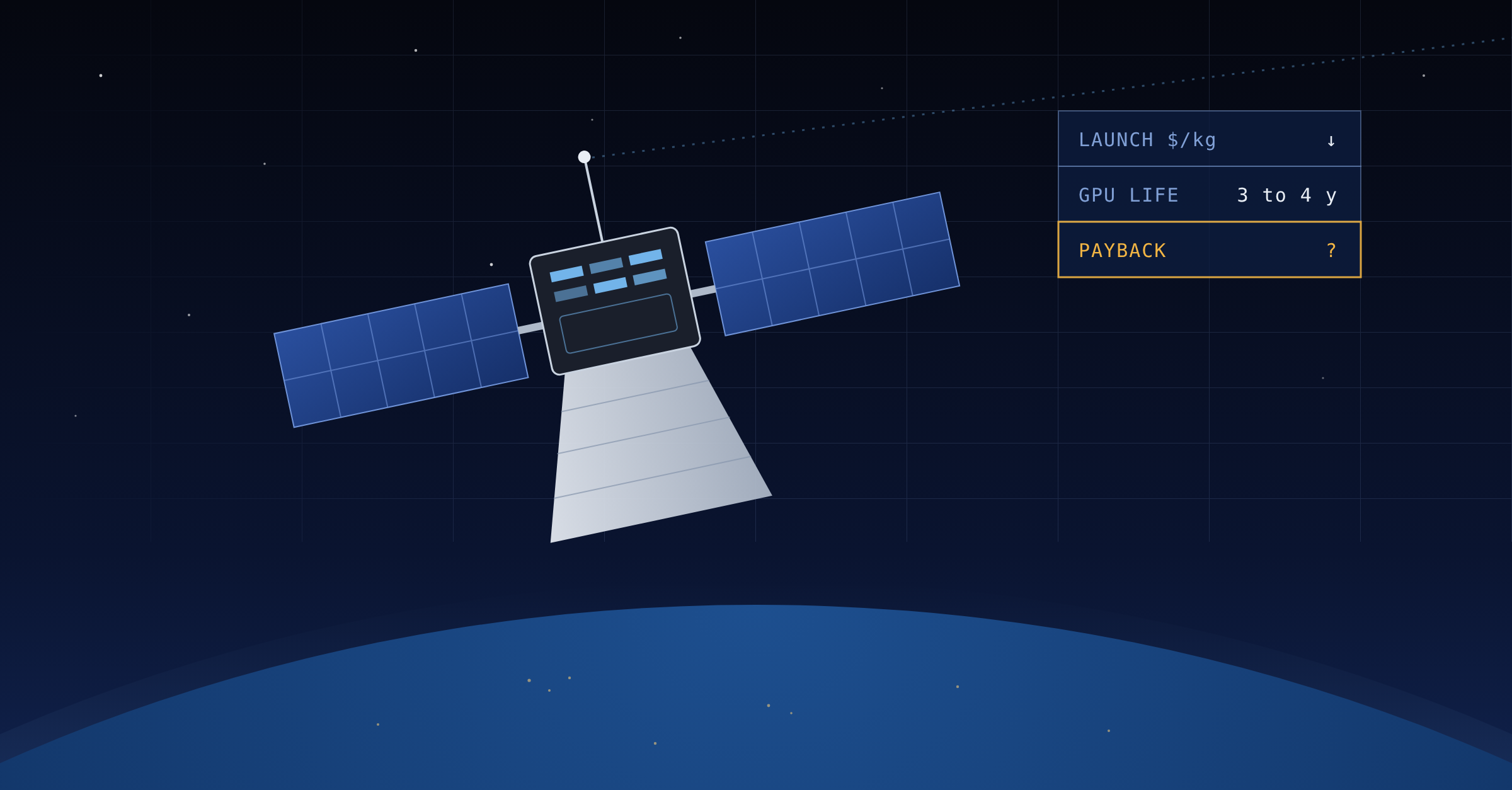
If I were sitting on the investment committee, I would ask the management of such a company three questions. Who controls the launch window, and what happens if a competitor gets it instead? How do you depreciate hardware that becomes technologically obsolete in three or four years and cannot be replaced, because there is no technician in orbit with a spare GPU? And which customer is paying today, rather than in the 2030 financial model? Nobody has a convincing answer to the first two yet. Answers to the third are starting to appear: Starcloud says its signed contracts, including with US government agencies, will cover the cost of Starcloud-2.
And Europe?
Europe has a study. ASCEND, prepared by Thales Alenia Space for the European Commission, concluded that orbital data centers are technically, economically and environmentally feasible, with an ambition to deploy 1 GW of capacity before 2050. Meanwhile, American startups are raising hundreds of millions of dollars in single rounds, and China already has satellites in orbit.
If digital sovereignty is to be more than a slogan, I’m afraid we will see a familiar script once again: Europe writing the regulatory framework for infrastructure that someone else has built.
Where the value really is
Space-1 doesn’t prove that data centers in space are a done deal. It proves something else: the conversation has moved from “is this physically possible” to “who will make money on it, and when”. That is a much healthier question.
In my view, over the next two to three years the money will be made by those who process data where it is created, rather than by those promising gigawatts. The gigawatts may come later, but they depend on the price of launch, which none of these startups control.
Space is worth looking at the way we look at any other infrastructure. Not through the lens of vision, but through the lens of who pays the bill for energy, transport and maintenance. In space those bills simply look different. And it is those bills, not the next announcement, that will decide whether orbit becomes a new market or just another chapter in the history of technological enthusiasm.
#AI #DataCenters #PrivateEquity #Infrastructure #ValueCreation
Related articles:
– Algorithms born of our prejudices
– Will algorithms commit war crimes?