Business Insider: Payments in the 21st century
My article published in Business Insider on 22 December 2019: Payments in the 21st century.
Paying with a chip or a thumb is just one element of the payments of the future, which are already being tested. In Russia, in some supermarkets you can pay for your shopping by placing your finger on a device that reads fingerprints.
Not long ago, financial operations required a visit to a bank. With the arrival of the internet, money could be transferred using a computer connected to the network. Both methods, however, meant that customers were heavily involved in moving their funds. Smartphones and ubiquitous mobility changed that dramatically.
Today’s users are starting to treat payments as something done in passing, alongside other activities. People pay while walking, travelling by car or at work. The number of steps needed to authorise financial transfers is shrinking radically, and e-commerce companies have a clear interest in this. Having watched its customers’ behaviour over the years, Amazon decided to introduce one-click payments. It was a response to the fact that many purchases were never completed: customers filled their baskets but did not buy in the end, because they had to go through too long a chain of data authorisations. A buyer offered a simplified payment model will buy more. That is the obvious factor behind companies’ commitment to creating and promoting ever simpler transaction tools.
The twilight of smartphones?
Technology speeds up processes and simplifies them, replacing inefficient tools with ones that offer users more convenience. Although mobile payments are becoming less complicated, the smartphone may also turn out to be a transitional stage in the evolution of transactions. I devoted one of my texts to the career of virtual assistants such as Siri, Alexa and Amazon Echo. Their popularity keeps growing, which is why many companies from various sectors are trying to adapt voice control to their own products and services. If we accept that in the future users will interact with devices without a traditional interface (the keyboard), moving towards touchless contact (voice, face scans), this trend will soon be reflected in personal finance.
Looking further ahead, if we achieve a research breakthrough and design, build and then commercialise technology that connects the human brain directly to a machine, only then will we be able to say that we have reduced the user experience to a single thought (in this case, it will be enough to think about paying).
I will not see that I am paying
Data about us is becoming the fuel of intelligent technologies. Its effective flow will not require our involvement. We are heading towards a situation in which all our interactions with devices such as smartphones, computers and cars are as fast, efficient and intelligent as possible, while not demanding our attention. Following this logic, payments in the future will become “invisible”. They will not require devices with an interface or apps that need the user to do anything.
Companies that act as intermediaries in settlements, and banks, may turn out to be unnecessary. The development of this phenomenon will go hand in hand with the spread of the Internet of Things – a system of connected devices that communicate with each other through sensors. This connection means autonomy and intelligence in data processing. Cloud technology and geolocation, in turn, will make it possible to integrate data from external devices – a shop, a car or a device such as a fridge – with the user’s personal data, including financial data.
Smart fridges, shop shelves and the cloud
So imagine a fridge that “discovers” on its own that I have run out of products I need. The order is placed automatically, the information goes to an online shop, which immediately sends me the goods ordered by the fridge. Payment is automatic. It happens in the background, using data that the shop – with my consent – has access to. The money (in the future, one of many digital currencies) is taken from my digital wallet, which is part of a system based on blockchain technology.
The chain of these operations no longer needs the conventional authorisations required by banks and intermediaries (such as PayU). If I decide to buy a product in a physical shop, the mechanism will be similar. When I take an item off the shelf and put it in my basket, the shop’s system will register it and send information about the event to the cloud, where the transaction will be processed – automatically, without my knowledge or confirmation. Data about my purchases will be processed by the shop’s systems and sent to the cloud not only to take money from me, but also to prepare a promotional offer for me. An additional witness to all these events may be… the fridge, which may want to add its two cents, for example by extending the order with missing products.
Banks stop being banks
The way we pay, and the way we will pay, illustrates the scale of change taking place in today’s financial markets. If we take into account the development of blockchain, the Internet of Things, voice assistants, the emergence of new cryptocurrencies and the plans of corporations that want to issue their own money, we have a full picture of the great disruption of the financial industry. To stay in the market, banks will have to go beyond the role of purely financial institutions offering traditional products such as loans and deposits. In my view, they will move ever faster from finance towards the technology sector. The bank as a technology company? Absolutely. In fact, it is already happening.
Corporations are building their own settlement systems
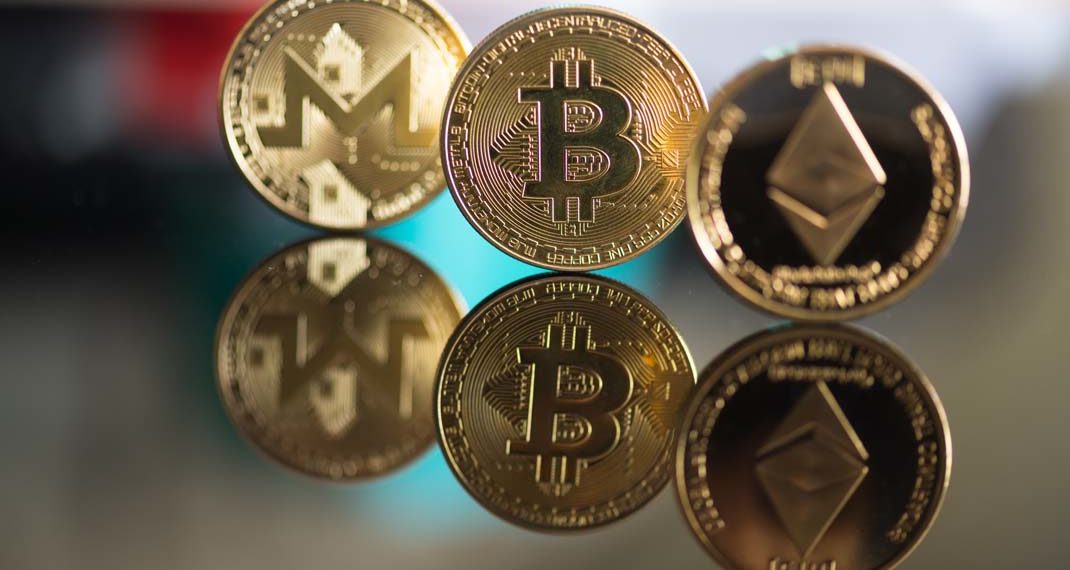
We know how much controversy cryptocurrencies arouse. One of the many accusations made against them is that a cryptocurrency is a purely technological creation, not backed by external assets or material value. But this argument is becoming outdated, because we are entering an era of currencies created by corporations.
The future of the financial and payments market will belong to GAFA (Google, Apple, Facebook and Amazon), or to any companies that hold capital in the form of data about customer behaviour. Facebook is getting closer to launching Libra, and Amazon is planning its own financial and settlement platform. In the case of corporations, the currencies they issue would be secured and backed by enormous assets made up of terabytes of customer data. Today these companies offer social tools or various consumer goods. If they add a currency to their portfolio, customers may start to question the point of traditional money and banks.
You, too, will issue your own currency
Creating your own money and issuing it publicly will be possible technologically, formally and legally. If a private user concludes that their currency (or just a token) has a chance of success in the market, they will simply issue it. If it succeeds, their purchasing power will grow rapidly.
Such a scenario will of course also affect transaction processes. Paying with your own money will have a psychological value: consumers may feel independent of the financial market. In addition, the more users use a given currency, the more efficient and simple its settlement mechanism will become, in line with the principle of self-improving systems based on deep learning.
I once wrote that one of the most valuable commodities of our time is trust. All the mechanisms I have described are entirely possible. But what sets them in motion is a human decision about whether to connect to such a system. Producers of goods and service providers creating their own currencies will have more and more tools at their disposal to build their own financial ecosystems.
Their greatest challenge may be convincing customers that their solutions are trustworthy. Here, I find it hard to say with certainty whether that trust will grow in step with technological progress.
The full article (in Polish) can be read at this link.
Related articles:
– A machine will not hug you, but it may listen and offer advice
– Can machines tell good from evil?
– Only God can count as fast: the world of quantum computers