Artificial intelligence
58 posts
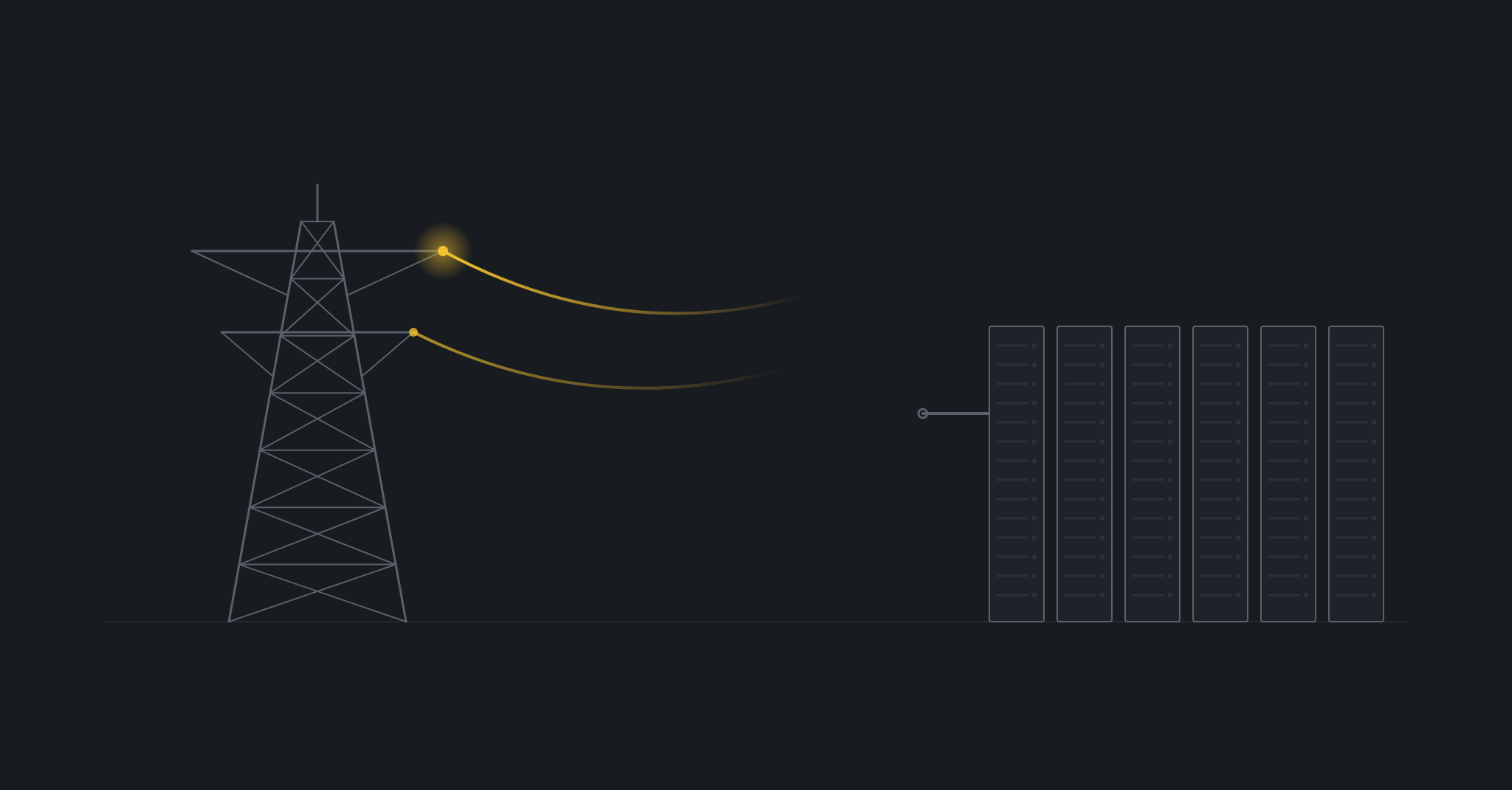
AI won’t run out of customers. It will run out of power and time to repay its debt
Many people read the sell-off in data center stocks as the first crack in the AI bubble. I look at the same numbers and see something else. The demand is there, and it is substantial. The trouble lies elsewhere: in the construction itself, in access
Is Artificial Intelligence Spiraling Out of Control? Philosophical and Technological Reflections
„Once, humans created tools. Now, tools are beginning to co-create humanity.” The Boundaries of Understanding Unpredictability was once the exclusive domain of nature and the human psyche. And yet, it is increasingly present in the technological world, especially in the case of AI, which learns,
The Unpredictability of AI: Between Fate and Philosophical Reflection
AI, much like fate in Stawiszyński’s philosophy, is a human creation that increasingly operates beyond our control, raising profound questions about agency, technology, and unpredictability. In the era of pervasive technological dominance, Artificial Intelligence introduces new dimensions of unpredictability into our reality. Drawing inspiration from Tomasz
Robodebt: What are you going to do when an algorithm wipes your account clean?
AI-based welfare systems are not flawless. While tech companies announce their cheerful visions of social change, the world’s poorest are being harmed by software errors leading to robodebt. I have previously written at length about the merits of artificial intelligence in business, environmental protection and
Navigating Generative AI: Enterprise Challenges, Strategies, and Adoption Stages
Enterprises are adapting to generative AI by using multiple model providers and cost-effective open-source models to overcome high costs, infrastructure challenges, and regulatory risks.
From the mastery of Go to therapeutic applications: How neural networks handle human emotions
Can a documentary on computer programming take the form of a drama that is full of plot twists, existential dilemmas and high emotions? Actually, it can. I have just watched AlphaGo, a film whose often tearful characters experienced highly emotional defeats and triumphs.
GPT-3 writes like a writer, codes like a programmer, and can be … dangerous
OPEN AI’s GPT-3 algorithm can write a sophisticated essay that a professional journalist would not be ashamed of. However, the most surprising thing about GPT-3 are its IT skills. Lines of code written by the algorithm turn out to be fully practical and can be applied to create professional software.
Artificial intelligence: Five stories about algorithms hitting the wall
We won’t have to implant chips in our brains to keep up with machines. Because for the time being, they are the ones that struggle to keep up with us.
Machine learning. A literature expert and an art connoisseur
Can algorithms interpret the works of Shakespeare in depth? Yes, they can, and they do it with a precision that many literature professors could only dream to achieve. Do they understand where the authentic value of paintings by renowned artists lies? Absolutely! They know so much about it that they can immediately tell a forgery.
Machines finally discover their consciousness
According to scientists, human consciousness not only cannot be replicated but also evades definition. The weakness of this view lies in the presumption that only one type of consciousness, the kind that resembles ours, is possible. And yet, it is conceivable that at successive stages of its development, AI may develop new, hitherto unknown modes of self-reflection.
When will robots embrace us?
The sight of a robot handling pallets in a warehouse is nothing unusual. How dumbfounded would we be though if that robot flew off the handle and raved about not wanting to work all day long. Is it possible for machines to feel anger, fear or joy and recognize such emotions in people?
What’s being done with your face?
Pattern and facial recognition is revolutionizing medicine, the automotive industry and marketing and making people’s lives easier. However, these advances have a dark side to them too. You should prepare for the fact that your face may attract a lot of interest in the coming years.
The clash of the dark side and the bright side. What is human-friendly AI?
The idea of a symbolic kill switch that would instantly neutralize hostile algorithms is not foreign to the average person nor to tech industry moguls and celebrity scientists. There is no point citing the repeated warnings of Elon Musk, Bill Gates, Yuval Harrari and Stephen Hawking regarding
Politicians and artificial intelligence. Can national strategies succeed?
For the first time in the history of societies, people will live with technology as a partner that is guided by its own rules and laws. Politicians are increasingly aware of the various consequences of AI expansion. Will they be able to regulate our relationship with AI?
Don’t kill a humanoid: do machines deserve to have rights?
In late July 2019, the world learned that the company Neuralink was close to integrating the human brain with a computer. The first interface hoped to enable the feat was unveiled. We may thus be in for an incredible leap in expanding our cognitive abilities. The
Covid-19. Are we entering an age of global surveillance?
Are we entering an age of global surveillance? It has long been common knowledge that digital technology can keep track of our every activity online. The digital tracks we leave behind are easy to follow.
Algorithms born of our prejudices
Are algorithms capable of discrimination? I am afraid they are. What complicates the question is the fact that algorithm developers can hardly be accused of malicious intent. How then could a mathematical formula put individuals and communities in harm’s way?
How to regulate artificial intelligence?
Lawyers, politicians and business people alike feel that the laws in place are failing to keep up with technological advances. Is it possible to regulate artificial intelligence efficiently and do we need such regulation?
Will AI save the labor market?
In many industries, digital technology reduces demand for human labor, and increases the net gain of intelligent machine ownership, such machines being cheaper than people. According to McKinsey, the digital revolution will put nearly 400 million people out of a job by 2030.
Artificial intelligence is an efficient banker
The most useful innovations that have emerged in today’s financial industry would not be possible without some basic capabilities of AI. The main ones are to process large volumes of data, perform predictive operations and conduct real-time analyses of information sets. These alter not only
Learn like a machine, if not harder
I find it quite hard to imagine a world in which almost all work is automated and only a select few privileged people get to hold a job. I am nevertheless of the opinion that those who fail to continue learning throughout their lifetimes are going to end up on the peripheries of the job market.
Time we talked to our machines
Over the last few years, artificial intelligence (AI) has advanced rapidly, with developers regularly reporting new breakthroughs. AI algorithms work ever faster. Until recently, skeptics argued it would take ages for robots to come anywhere close to moving like humans. It was easier to program
The seductive business logic of algorithms
Certain machine behaviors never cease to amaze me. I’m astounded by their ability to learn from their accomplishments and from their interactions with we humans. Unfortunately, many business managers still think of artificial intelligence (AI) and machine learning algorithms as something that will be impossible
Will algorithms commit war crimes?
Will algorithms commit war crimes? It’s clear that the military is developing smart technologies. We owe many of the innovations we know from civilian applications to military R&D, including the internet itself (which began as Arpanet), email, and autonomous vehicles. But today modern weaponry relying on machine and deep learning can achieve a worrisome autonomy.
Machine, when will you learn to make love to me?
Contemporary debates on robotization focus typically on machines that populate workplaces. However, people’s lives are not all work. We need close human contact and emotional interactions with others. All this also concerns the area of eroticism. Are we in for a sexual revolution featuring artificial
Seven tips how to use Artificial Intelligence to take your company to another level
Here are a few tips which I hope will be helpful to transform your business through technology. I am confident we will soon reach a point where we will no longer view artificial intelligence as a mysterious dark force, and will see the media frenzy
Artificial Intelligence for Industry Economic Forum
On March 4-5 of 2019, 11th TIME conference was held. The event was an opportunity to meet business, suppliers, regulators and technologies. 56 speakers attended over 32 speeches and attracted over 900 people in two days. I had a pleasure to open the conference with Key Note
Technologies that will change 2019
Certainly, rapid progress in artificial intelligence will continue to be made and be widely reported. Despite the controversies, autonomous vehicles will proliferate, and it would be good to see serious, in-depth articles about industry regulation (licensing for the use of autonomous vehicles on public roads,
Hello. Are you still human?
For many people, artificial intelligence (AI) holds the promise of better, easier and longer lives. Perhaps even more. The unfolding AI revolution, complete with machine learning, deep learning and cognitive computing (i.e., machines capable of learning from their own mistakes, or from patterns discovered in
Automation will not destroy all jobs
Pessimists predict that technological advances will benefit corporations, not workers. The way they see it, robotization in the manufacturing and service sectors will allow companies to lay off people and destroy jobs en masse. I believe artificial intelligence (AI) will create an abundance of new
Machine Learning. So what is the computer’s ability to learn?
My article in BrandsIT dated June 10th, 2018. We are naturally delighted to see babies smile when they recognize our faces as we lean over them. We are amazed to see little ones utter their first words as they repeat after us. Then comes
Artificial Intelligence for Big Players Only
Digital data is the lifeblood of companies like Google, Facebook, and Amazon that deal with customers almost completely online. They live and die on this data, using it to improve the way they interact with customers every day. Such companies can afford to run big,
Who will gain, and who will lose in the digital revolution?
The changes we are witnessing today are being driven by the growing use of technology in everyday life. Artificial intelligence (AI) and self-learning machines are already altering the ways decisions are made and information communicated. The process is irreversible and accelerating. In the near future,
When will we cease to be biological people?
For many people, artificial intelligence holds a big promise of a better, easier and longer life. Perhaps even more. The technological revolution unfolding before our eyes is delivering machine learning, deep learning and cognitive computing (i.e., generally, machines capable of learning from their own mistakes,
Artificial intelligence is new electricity
The whole of humanity is becoming connected to the global web and, within years, every inhabitant of the planet will enjoy full access. This will place new communications options and unlimited digital data, products, services and content at our fingertips. Never before in the history
Robots awaiting judges
Planet of the Machines: Questions for a New Age Humans tend to become flustered when confronted with a rapidly changing reality, and let’s not exclude our lawyers and legislators. They’re human, too, and they surely realize that the laws we’ve created are frequently inadequate
Will a basic income guarantee be necessary when machines take our jobs?
Automation of work, robotization and artificial intelligence will reduce demand for human labor. By 2050, more than 250 million people will lose their jobs. Ensuring a basic income for citizens will become a political issue. Inevitable changes to work and pay schemes The income
Can robots sin?
Each of us makes numerous decisions daily that concern essential ethical issues. Our daily choices between good and evil are largely habitual, many of them aren’t even noticed by us. However, in the world of artificial intelligence, morality is becoming increasingly problematic. Can robots sin?
Machine, when will you become closer to me?
Contemporary debates on robotization focus typically on machines that populate workplaces. However, people’s lives are not all work. We need close human contact and emotional interactions with others. All this also concerns the area of eroticism. Are we in for a sexual revolution featuring artificial
How I love to get scared in movie theaters – my favorite Artificial Intelligence films
Advanced technology has been extremely alluring to the film industry and, at times, has been embodied in an evil character. Clearly, in the coming years it will unseat aliens in their role as the prime source of viewer terror. Contemporary film producers want us to
The end of the age of humans
Big Brother has always been watching us, except that these days, he does it far more efficiently and thoroughly. After all, he is online, meaning he can access our e-mails, bank statements, phone calls and social media posts. He can also easily structure the information
A machine will not hug you… but it may listen and offer advice
As its users, we have grown to take technology for granted. Hardly anything these days is as commonplace and unremarkable as a personal computer that crunches numbers and enables us to read files and access the Internet. Will computers ever amaze us again in any
Living brains beget artificial intelligence
Artificial intelligence is frequently presented as an abstract demonic force that can do unforeseeable things. This view persists despite the fact that machine learning, autonomous vehicles, the internet of things and the feats of IBM’s computer Watson are the work of living brains, people who
Artificial brains save the Earth
You don’t have to be an environmental activist to realize just how vulnerable the Earth’s ecosystem is. Can modern technology help us protect it? Can we employ artificial intelligence to save the environment globally? I have a few examples for you to demonstrate how
Can machines tell right from wrong?
Programmers involved in developing algorithms for use in autonomous vehicles should prepare to have their work become the subject of a heated ethical debate rather soon. The growing popularity of self-driving cars is already giving headaches to lawyers and legislators. The reason is the complexities
Medicine of the future – computerized health enhancement
Civilization diseases, societal ageing, new microbe mutations that evade identification coupled with faltering health care systems are all inevitably a part of our near future. Medicine confronts such challenges with attention and hope, even a growing appetite as it observes the rise of the latest
Machine Learning. Computers coming of age
The machine learning technology proves that today’s computers are acquiring ever more astonishing skills. Perhaps their ability to take in and process newly acquired knowledge will one day enable them to sustain artificial intelligence. What exactly is the computer’s ability to learn? We are naturally
Surviving in the digital age, future-proofing your business
Our friends and us have gone on a weekend trip into the wilderness lately, leaving behind all trappings of civilization. All worked wonderfully until our friends’ teenage son threw a fit over his smartphone which he shook anxiously, bellowing: “What is this! No Internet?!” We
What a machine will think when it looks us in the eye?
About machine consciousness In reply to a journalist’s question on whether machines will ever be able to feel, Oren Etzioni, co-founder and CEO of Allen Institute for Artificial Intelligence, an organization established two years ago by Microsoft co-founder Paul G. Allen, said: “The short answer
Invasion of Artificial Intelligence – this is what we can expect in 2017 (part 1 of 4)
Last year saw a breakthrough in the spread of the notion of Artificial Intelligence. The term was frequently mentioned in the media, attracting growing attention, and not without a reason. Much of the hype resulted from the activities of business gurus like Elon Musk
Artificial Intelligence for all – this is what we can expect in 2017 (part 2 of 4)
Digital technologies are no longer an abstract idea that only preoccupies IT geeks. Computer-controlled cars, buildings and airports make up an interactive global network of cosmic proportions. In 2017, we will see better than ever how seemingly abstract algorithms transform into technological organisms that
End of the world we know, welcome to the digital reality
Digitization affects organizations Organizations established in the digital economy often rely on casual hierarchies. They tend to be managed by people who make immediate decisions. For a modern network organization, the tangible effects of such decisions are more important than the processes that
The brain – a device that becomes obsolete
Most people today find it difficult to keep up with the break-neck pace of technological advances. Scientists increasingly claim that to understand the future, which surprisingly is now, people have to adopt their brains. Unless brains adapt, a wall of misunderstanding will grow between
How machines think
Technological advances make you wonder: is this the start of a new world ruled by intelligent machines? Is there such thing as artificial intelligence? The development of artificial intelligence in robotics is not as unlikely as you might think. A growing number of technologies enable
Artificial intelligence – real threats or groundless fears?
Artificial intelligence – real threats or groundless fears? The world’s greatest thinkers, including the author Stanisław Lem, the Nobel prize winners Stephen Hawking and Frank Wilczek, and the mathematician John McCarthy, have warned against the rising threat from intelligent machines. The threat isn’t only about
Work of the future – reinventing work
Man at assembly line The film Modern Times starring Charlie Chaplin features a scene showing factory workers struggle to cope with a conveyor belt. Chaplin’s character is one of the workers. Unable to keep up with the production line’s breakneck pace, he ends up trapped
On Tesla and the human right to make mistakes
People will remain irreplaceable Whether in business, technology, industry, marketing or sales, automation increasingly affects every person’s life. Some people experience it more powerfully and sooner than others. In its report on Artificial Intelligence (AI), McKinsey & Company points to drivers and other vehicle
Modern technologies, old fears: will robots take our jobs?
In Stanislaw Lem’s „Return from the Stars”, the astronauts returning to Earth, after many years in the universe, find the world in which nobody works – robots and artificial intelligence perform all duties. It turns out that the astronauts have absolutely nothing to do. Their